Showing posts with label René Jara. Show all posts

Friday, December 10, 2010

A Former Student Remembers René

For Professor René Jara, who knew that books were about life, by Anya Achtenberg (Department of Spanish and Portuguese)

A former student remembers our colleague René Jara
When I first began taking courses with Professor Jara, I was going through another round of undergraduate work, having discovered that I loved the Spanish language and its literature, and needed to know more of the cultures and struggles of Latin Americans. I did not actually know then that I was part Sephardic; I had not had the experience of meeting "cousins" in New Mexico who were descended from Sephardic Jews also expelled from Spain hundreds of years ago, nor had I had the experience of the caretaker of a synagogue in Istanbul taking one look at me and speaking to me in Ladino, the Judeo-Spanish language the Sephardim took with them into diaspora.
But I was indeed in love with Spanish, and a bit terrified of returning to school after a rough coming of age in New York, and plenty of blows telling me I simply was not good enough to learn much of anything. In secret I had been reading the poems of Neruda and Lorca, Vallejo and Hernandez, out loud, and struggling from page to page to decipher them. After moving to Minnesota from the east coast, I pushed past fear to return to school, and suddenly I was in René's class. And I kept taking René's classes, semester after semester.
This man could drink coffee, and indeed did. Way too much. I doubted he slept at all; indeed, who could, having read as much as he did? And loving every word, clearly. I wrote down as much of what he said as I could, and I know that he found those notebooks quite, let's say, complete. I don't doubt that writing out what he said in class has contributed to what I do know of the Spanish language. There are still moments, after years of having dropped the work to concentrate on the English language in my own writing of poetry and fiction, that my tongue is freed and my Spanish moves well.
What I found in studying with René was enormous intellectual stimulation; an infinite passion for language, for the complexities of texts and the mysteries they hold; a way for a fierce sense of justice to be incorporated into the hard good work of university teaching; and an embrace of all of his students, me included. What I found that was absolutely irreplaceable for me was a brilliant and passionate scholar and a master teacher who somehow managed to convey to me that I was, indeed, quite smart myself. This may not mean a great deal for some people, but with my origins, this was life-changing, and it is something I have worked to do and continue doing in my own teaching: to convey my true belief in the gifts of the people with whom I work.
I always connected to the things he told me about his life growing up in Chile, most especially that his mother was illiterate. (Perhaps my memory is wrong; perhaps his mother was college-educated, a teacher, but my memory holds this conversation.) I always sensed that he was speaking for more than himself, and his hunger for reading and learning was something I could understand from my own experience, my own background.
I cannot recall his support of the best in me, of that synthesis of the very cerebral and the very compassionate, without a deep sense of grief at the loss of René, too early, nor without knowing that this very thing, this support, is something he was able to give many more than me. He was excited about my work, or seemed so. He trusted me to translate a paper of his for a presentation at the MLA, although I was much more of a beginner than not. And he praised the results. He read my first book of poetry, published shortly after I received my degree from the University of Minnesota, and praised it as well, likely beyond what it deserved, perhaps because he knew that it was an opening to more, a synthesis of hard knocks and whatever gift of language lived within me. He wrote me letters of recommendation that were more complete and specific than I have ever seen anyone else do, even for their best students. I tend to write letters like these, I realize.
I left Minnesota, but every few years or so got in touch with René, and never worried that he would not remember me or would not welcome me. I occasionally visited, breathing in deeply the air of his office, and knowing it was food for someone hungry to go home to language and literature in this disciplined and joyful way. I brought him my next book of poetry. He saw the growth. He never failed me, ever. Neither in being a wonder to talk with, nor an ally in a profound sense.
I was so happy as he made a family, put on a few pounds. I remember those days when his diet of coffee and (I think I recall) many cigarettes kept him thin. The last time I saw him was before his surgery, and I was so happy to hear from him afterward, and imagine him reading as much and whatever he pleased, and spending time with family and friends.
My memory can locate in those piles of notebooks from René's classes a phrase of his lecture--perhaps his own; perhaps a quote (and if this is a known phrase and you have the source, please inform me!)--that poetry is: words searching for other words; palabras buscando palabras.
This phrase reminds me that René's words seemed always to be searching for other words on this poetic road, and that he searched for the poetry in his students. For many of us, his search was so skillful, so loving and knowledgeable, that it yielded up the poetry in our hearts and minds, in a language we had not known we possessed.
Anya Achtenberg
www.anyaachtenberg.com

Friday, September 11, 2009

"Anduvimos Como Los Hijos Que Perdieron signo y Palabra" (La generación de 1973) (*) por Soledad Bianchi


"Last week of freedom for 17 years. Santiago, Chile, Sept 73" by Marcelo Montecino**


I go through René's papers and things a little bit at a time. Two years after his death I am still reading old papers and finding things that I was unaware of when he was alive. Last night I read this article written by one of René's students when he was still a professor in Chile. Soledad Bianchi wrote this article in 1989. She is also a poet. My apologies to those of you who can't read Spanish and would like to read this article. It is about an idealistic generation of Chileans that hoped for so much with the election of Salvador Allende and the aftermath Pinochet's coup in 1973. It is the 36th anniversary of the coup.

En el mismo centro de la década del sesenta, en 1965, yo ingresaba a la universidad. Venía de un colegio particular, católico, de clase media acomodada, pero para continuar mis estudios de Profesora de Castellano había elegido la laica Universidad de Chile y su facultad más combativa y atrayente, el Pedagógico. Hacía sólo un año se había iniciado el gobierno de Eduardo Frei. Desde el Padagógico, la rebeldía, la protesta, la ampliación de mundo, la corrida de barreras mentales, más confianza en el porvenir, los paseos por sus jardines, el estudio, la reforma universitaria, la taza de té de Nicanor Parra con la señora Nixon, la guerra de Vietnam, la muerte del Ché, la Nueva Canción Chilena... Todavía allí, en el mismo Pedagógico, ahora como docente, participé en la elección del Presidente Allende en 1970. Me cuesta pensarme sola en esa época de proyectos colectivos, prolongada hasta que desde esos mismos patios miraríamos desolado el bombardeo de La Moneda, oyendo, impotentes, los rumores más feroces del golpe de estado.

Fin de una etapa y no sólo para mí, brutal cierre de un ciclo para nosotros, ciertos chilenos, algunos chilenos, muchos chilenos, que vivimos nuestra juventud impresa por la marca de la esperanza, del optimismo, de la creencia en un futuro mejor que estaba en nuestras manos variar. Rasgo propio de la juventud, podría pensarse, y tal vez lo sea, así como nuestra generosidad y entrega: queríamos, estábamos seguros y convencidos que lo mejor sería para todos, luchábamos -junto a otros- para que los cambios favorecieran a las mayorías, mucho más allá de nosotros. Quizá esta certeza absoluta era la base de la alegría, la confianza podría verse como el cimiento de cantos, de consignas gritadas a todo pulmón, de desfiles y marchas, de banderas. ¿Irresponsabilidad?, tal vez, pero preñada de amor, humor, desdén, y, ¡ay!, una buena dosis de sectarismo. Y, rápido, mucho color y sol nublándose ese martes 11 de septiembre 1973 cuando quedamos sujetándonos apenas con las uñas de las potentes rocas que nos habíamos negado a percibir en nuestras cercanías, apenas afirmados de ese terreno que se dezlizaba bajo nuestros pies.

Entre la fe ciega, la derrota y la añoranza, asi quedamos situados en un nuevo espacio, ahora ajeno y de otros, aun que obligadamente nuestro, también, a pesar de nuestra diferencia: jóvenes-viejos, ahora: aterrados, derrotados, vencidos y con el desconcierto del corte brutal, del fin abrupto, desconcertados ante este nuevo mundo donde hasta el lenguaje había variado. Obligados a simular indiferencia, constreñidos a olvidar con rapidez, a fingirnos otros sin pasado, con la intención de no olvidar proyectarnos, ¿a dónde, cómo, con qué, con quiénes?

Quince años más tarde, el viernes 7 de octubre de 1988, en medio de la alegría y el bullicio de grupos, entre multitudes, una mujer hierática no sigue la muchedumbre que ingresa al Parque O'Higgins. En sus manos, un cartel: "Humberto F., detenido-desaparecido, saluda el triunfo del NO": ¿cómo no identificarse con ella si cualquiera de nosotros podría haberla reemplazado como mujer, madre, hermana, pariente o amiga de detenido-desaparecido, cómo no reconocerse en ella si una mínima circunstancia podría haber variado el nombre del ausente por alguno de los nuestros? Sobrevivientes, débiles y fuertes, enteros y vacilantes, eso fuimos, eso somos, los que hablaron y los de silencio poderoso, ni héroes ni traidores ni monumentos sino mujeres y hombres rodeados de muertes, violencia, injusticia, exilio, cesantía, resentimiento, sospecha, censuras, desconfianza... y solidaridad. Ahora, más realista, quizá demasiado pragmáticos, no tan creyentes, menos militantes y ojalá menos sectarios, con la amargura de un mundo ido que como todo trayecto vital es imposible de recuperar, con afanes desmitificadores, pero sin olvidar. Y con el desgarro de esa mujer que festejaba el plebiscito desde su dolor, mirar hacia adelante y construir nuevas oportunidades sin negar ni negarnos, nosotros los veteranos del 73.

-Soledad Bianchi
Octubre de 1989

(*) Versos del poema "Cordillera" de Gabriela Mistral

Photograph from

1973, Chile Before and After the Military Coup

Wednesday, February 11, 2009

Remembering Rene Jara


On November 28, 2007 we honored the life and work of Dr. Rene Jara as a professor, a mentor, a scholar, and a citizen of the Department of Spanish and Portuguese Studies at the University of Minnesota for 28 years. After battling a serious illness, Rene passed away at his home on November 19.
At the memorial, colleagues and students were invited to share their memories of Rene, which were collected and presented to his family. Resounding themes in the remembrances were Rene's insatiable thirst for knowledge, his textual erudition, his scholarship, and his intellectual energy.
Professor Nicholas Spadaccini referred to Rene as "the best read person in our department." That sentiment, along with others, was repeated several times throughout the memorial service. His extraordinary knowledge of all areas of Hispanic literatures assisted him in his undergraduate teaching, graduate student advising, and academic publications. Colleagues stated that, regardless of the topic of conversation, Rene always managed to direct the group toward literature.
In addition to his consummate scholarship, Rene was beloved by his students and colleagues. His passion for poetry was contagious. As former colleague Antonio Ramos Gascon stated, "With a Nerudian passion for people and things, Rene connected with life--family members, friends, texts, writing, objects--by way of poetry." Perhaps it is fitting that Jenaro Talens summed up his feelings for Rene through a poem titled "Recapitulaciones."
Quedate a solas con la luz.
Mirala arder como un volar inmovil.
Hoy el mar esta lejos; dentro, incluso, de ti
Y un sol liquido esparce la neblina
Mientras tus pies te llevan a la noche
Con la belleza absorta del ocaso
Alumbrando el camino,
Esta otra forma de la muerte en flor.
Professor Jara's presence in our department and the University community will be hard to forget. Rene's memory will persist through our colleagues' anecdotes, his students' passion for literature, and his dedication to teaching.

Saturday, November 04, 2006

Introduction by Selena


Good Morning Lizards and Slugs, this is Selena, daughter of this cyberspace family that you have stumbled upon. While I fully wake up I am typing this, waiting for my maternal section of the parental unit to get me coffee which is why this post seems slightly, well.... insane.

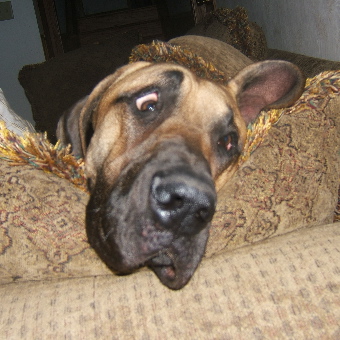
So now I will introduce you to my world. Later on you will meet the maternal section of my family unit in which I mentioned earlier, presumably in later posts, she is the one that mixs together food to put in our darling little stomachs, cleans house to get us from wasting away in our own flith, and spoils all the little critters that live with us, to which I will introduce you later. But be not fooled! Mother Dearest can not only trounce you in a game of puzzles but she can wrestle a 150 pound Great Dane into submission (Jota, our dog).

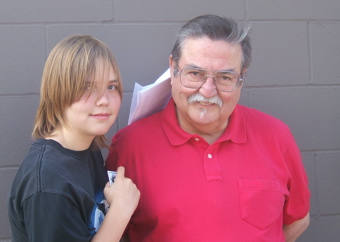
Next we meet, René, paternal unit of the Jara household. René works very hard as a professor of Latin American Literature at the University of Minnesota. René deals with other professors all the time and is famously patient (at least with us) and sweet.

Then there is Xavier, my younger brother in the Jara Family, who enjoys a number of musical intruments (banjo, guitar, and violin) and loves to play a number of video games (of which I like to play "Kirby", a fluffy pink, floating ball). He is also the one that keeps our mangy mongrels consistently amused and tired most of the time.

Me? No... there's no way I could make an accurate character assesment of myself, I'll leave that up to whoever wishes to write about me.

Till next time Lizzies and Sluggies,
Selena